
- krofta@kroftaengineering.com
- Durga Bhavan A-68, FIEE Complex, Okhla Industrial Area Phase – II, N.D – 110 020

Municipalities
How can we help
- Krofta can provide DAF technology for sludge thickening
- Sludge de-watering screw presses
- Sludge de-watering belt filter presses, twin wire or triple wire
- Disc Filter as a polishing unit after secondary clarifiers
MUNICIPALITIES
Primary treatment and sludge dewatering are crucial processes within municipal sewage treatment plants. These processes play significant roles in removing pollutants and solids from wastewater, ensuring that the treated water meets environmental standards before it is released back into the environment.
Primary Treatment: Primary treatment is the first step in the sewage treatment process. Its primary purpose is to physically separate large solids and suspended particles from the wastewater. This helps reduce the organic load and pollutant levels in the wastewater, making the subsequent treatment processes more effective. Primary treatment typically involves the following processes:
- Screening: Wastewater passes through screens that remove large debris like sticks, leaves, and plastic.
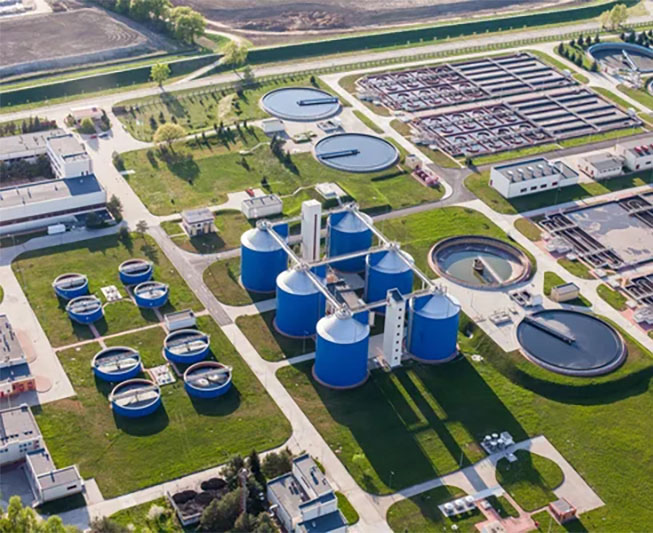
- Clarifiers: Clarifiers work on the principal of sedimentation to remove suspended solids
Sludge Dewatering: Sludge is the semi-solid residue that remains after the primary and secondary treatment processes. Sludge dewatering is essential to reduce the moisture content of the sludge, making it easier to handle, transport, and dispose of. The main objectives of sludge dewatering are:
- Volume Reduction: By removing water, the volume of sludge is reduced, which lowers transportation and disposal costs.
- Stabilization: Dewatering helps stabilize the sludge by reducing the water content, which in turn reduces the potential for odor generation and microbial activity.
- Pathogen Reduction: Dewatering can aid in reducing the concentration of pathogens in sludge, making it safer for handling and disposal.
Common sludge dewatering methods include:
- Mechanical Dewatering: Techniques such as centrifugation and belt filter presses use mechanical force to separate water from sludge.
Both primary treatment and sludge dewatering are integral parts of the overall sewage treatment process. They help in the removal of pollutants and solids from wastewater, minimizing the environmental impact of sewage discharge and contributing to the protection of public health and the environment.